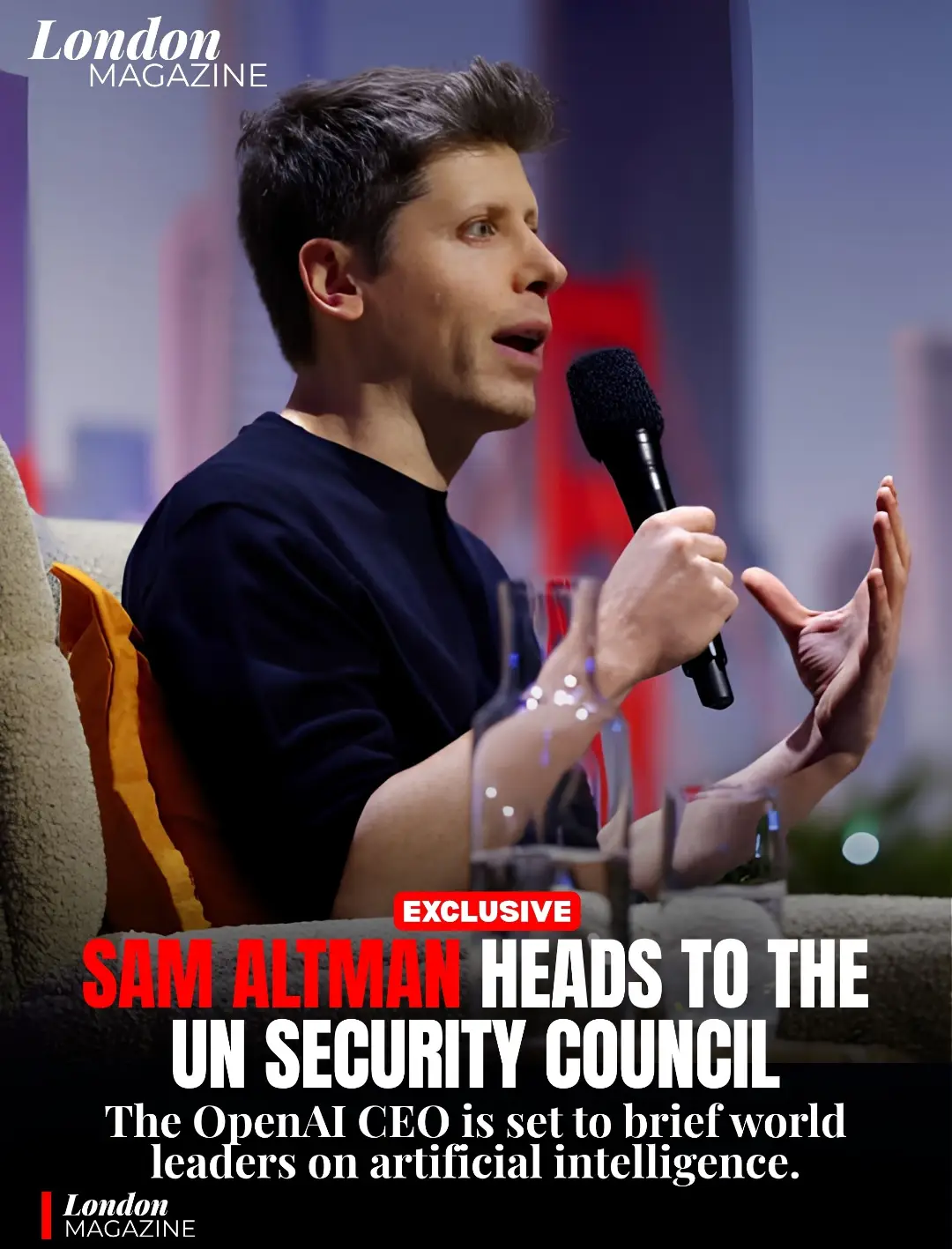
OpenAI’s chief executive is scheduled to brief the United Nations Security Council during the UN General Assembly period in New York, highlighting the growing role of artificial intelligence in international policy and global security.
AI Becomes a Global Diplomatic Priority
Artificial intelligence is moving beyond the technology sector and into some of the world’s most influential political institutions.
According to Reuters, OpenAI CEO Sam Altman is scheduled to brief the United Nations Security Council during the UN General Assembly period in New York. The reported appearance underscores how rapidly AI has become a subject of international discussion, raising questions that extend far beyond innovation and commercial competition.
As governments assess the opportunities and risks associated with increasingly capable AI systems, conversations about the technology are becoming an important part of the global diplomatic agenda.
From Silicon Valley to the United Nations
For years, artificial intelligence was discussed primarily in the context of technological progress, business transformation and digital innovation. Today, its implications reach into national security, economic stability, information integrity and international cooperation.
Altman’s scheduled briefing reflects this changing landscape. As the leader of OpenAI, one of the companies at the forefront of generative AI development, he occupies a prominent position in conversations about the technology’s capabilities, limitations and future direction.
A briefing to the Security Council would place AI-related perspectives within a forum traditionally focused on international peace and security.
The Opportunities — and the Questions
AI has the potential to support scientific discovery, improve productivity, strengthen public services and help solve complex global challenges. At the same time, its rapid development raises difficult questions about cybersecurity, misinformation, autonomous systems, accountability and the concentration of technological power.
For policymakers, the challenge is to understand these possibilities without overlooking the risks.
International dialogue can help governments exchange perspectives, identify shared concerns and explore approaches to responsible development. However, reaching agreement across countries with different political priorities and technological capabilities remains a significant challenge.
Why This Moment Matters
The growing presence of AI in diplomatic discussions signals a broader shift in how the world approaches emerging technologies.
Decisions made today may influence how AI is developed, deployed and governed for years to come. Governments, technology companies and international institutions are increasingly being called upon to consider not only what AI can achieve, but also how its benefits and risks should be managed.
Artificial intelligence is no longer just shaping the future of technology. It is becoming part of the conversation about the future of global security and international cooperation.
As AI enters the diplomatic spotlight, the central question is how the international community can encourage innovation while building the safeguards and cooperation needed to navigate a rapidly changing world.
Source: Reuters. The scheduled briefing and its details should be checked against the latest reporting before publication.